7 Lessons from AIDS 2026 on HIV, Equity and Community Power
At AIDS 2026 in Rio de Janeiro, global HIV leaders gathered at a moment of profound uncertainty.
Funding cuts. Growing attacks on human rights. Deepening inequalities.
These issues dominated conversations throughout the world’s largest HIV conference, which brought together thousands of researchers, healthcare professionals, policymakers, activists and people living with HIV from across the world.
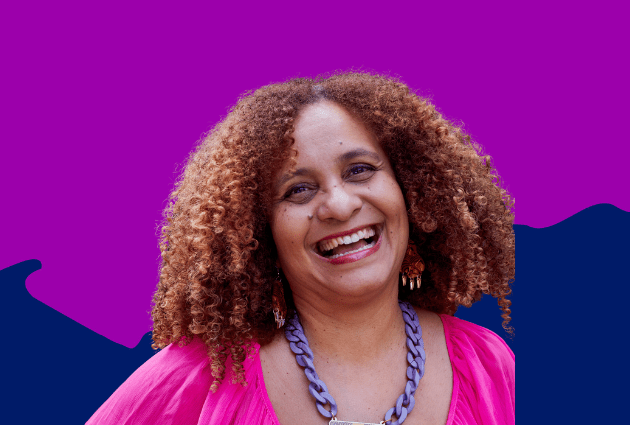
I was there as Lead Rapporteur for Community and Leadership sessions, working alongside the truly awesome rapporteur team of Aisia Castelo, Idris Kennedy Mwendwa, Juan Michael Porter II and Renatta Langlais Freeman. It was a privilege, a joy and an honour.
Rio may have had the edge over Croydon (don’t @ me), but I stayed up late each night writing reports and eating pringles from the mini-bar for dinner, while it seemed to me everyone else was doing the samba on Copacabana Beach.
I’ve attended AIDS conferences before. But this time felt different.
The HIV response is in a profoundly different place from where it was just two years ago. Across the conference, speakers described a world facing unprecedented uncertainty and change.
And while many of these conversations focused on global challenges, they have important implications for London too.
1. Global HIV funding cuts are threatening decades of progress.
“Every time we turn around, something is being taken away from us.”
These words from Erika Smith, speaking during a session about the stigma and growing political threats facing Black women sex workers in the United States, captured a sentiment that echoed throughout the conference. Communities around the world spoke about losing funding, trusted services, safety and rights.
The numbers shared in Rio were harrowing.
A survey of organisations delivering PEPFAR-funded HIV programmes across 46 countries found that funding terminations had led to the closure of more than 1,700 service sites. These were public health facilities, community access points and drop-in centres. Places people relied on. Places where people accessed prevention, treatment, peer support and care.
Funding cuts mean trusted services disappearing from people’s lives. Often with devastating consequences. And these cuts are political choices. Not inevitable. Community organisations are being forced to dramatically reduce or completely stop outreach, peer support, advocacy, harm reduction and prevention activities. Decades of progress are at risk.
2. HIV inequalities are driven by racism, stigma and discrimination.
One of the strongest messages from AIDS 2026 was that HIV inequalities are not simply driven by individual choices. They are driven by systems.
At the same time as funding cuts, many countries are experiencing a rollback in rights and growing hostility towards communities most affected by HIV. Uganda’s Anti-Homosexuality Act was one stark example discussed at the conference. Laws that criminalise LGBTQ+ people make accessing HIV testing, prevention and care more dangerous.
The impact of racism as a driver of HIV was also explored in a powerful session featuring Dr Oni Blackstock and Thiago Cruz. Their message was clear: racism is not simply individual prejudice. It is embedded within systems, including healthcare systems.
And London is not exempt.
This matters because while London has world-leading HIV treatment and prevention services, not everyone benefits equally. Racism, stigma and structural barriers continue to prevent many people from accessing the care and support they need.
3. Communities are not hard to reach. Services are failing communities.
The communities most affected by service cuts and political attacks are often those already experiencing the greatest inequalities. This includes trans people, sex workers, people who use drugs, migrants, gay and bisexual men, Black people and women. And for people experiencing multiple forms of discrimination, the impact can be even greater.
One session made me question how we think about resilience: Black communities are constantly praised for our strength and resilience. Let’s face it, we’ve had no choice but to be resilient with all the shit we’ve been through.
But sometimes celebrating resilience means celebrating our ability to carry on despite receiving less than we deserve. We should not have to be exceptionally resilient simply to receive respectful, effective healthcare.
Sometimes we need to move from resilience towards resistance. Recognising substandard care. Challenging racism and discrimination. Expecting better.
This matters in London. We may have world-leading HIV treatment and prevention, but not everyone benefits equally. If London is serious about ending new HIV transmissions and reducing inequalities, we must stop celebrating resilience while leaving the conditions that make resilience necessary unchanged. Services must adapt to people’s realities rather than expecting people to adapt to services.
4. Community leadership works. The question is whether we will fund it.
Despite the challenges discussed in Rio, the conference was also full of evidence about what works.
Again and again, speakers highlighted the impact of community leadership; how successful and essential it is.
Communities are generating evidence, improving services and strengthening accountability. Through peer support, community-led monitoring, campaigning and information sharing, and so much more, they are building trust and improving health outcomes.
Communities should be leading research, policy and programmes. Not simply being consulted after decisions have already been made. In one workshop, Fast-Track Cities London’s Garry Brough brought together peer-support leaders from Malawi, Argentina and the Philippines. Across very different settings, the message was consistent: peer support reduces stigma and isolation, improves wellbeing and helps people remain engaged with HIV treatment and care.
The question is no longer whether peer support works. It is how we fund it properly and make it a routine part of high-quality HIV care.
5. London already has examples of what works.
During the conference, I had the opportunity to meet Dr Tedros Adhanom Ghebreyesus, Director-General of the World Health Organization, as part of a small group of global community leaders.
I spoke with him about the HIV inequities we face in the UK, and about what is working to make a difference. One example I highlighted was Skin Like Mine, London’s groundbreaking HIV prevention programme by and for Black communities, as a gold-standard example of what community leadership can achieve. (Full disclosure: I work on it and the London HIV Prevention Programme funds it). Over just four months, it engaged more than 1,500 Black Londoners, and more than a third of those tested had never tested for HIV before.
London has much to learn from communities around the world. But through programmes like Skin Like Mine, led by One Voice Network, we also have something valuable to contribute. It shows what becomes possible when communities are trusted and funded to lead.
6. Innovation is more than just new medicines. It must be about access.
Rio also brought exciting scientific news. Researchers presented promising Phase 3 results for an HIV treatment pill combining two HIV medicines that could be taken once a week instead of every day. We also heard further evidence about highly effective injectable PrEP given just twice a year.
But innovation raises an important question: who will benefit?
Brazil helped generate the evidence for twice-yearly lenacapavir by taking part in a major PrEP trial. Yet Brazil and much of Latin America were excluded from agreements intended to make lower-cost generic versions available.
That contradiction was highlighted by Brazilian journalist and HIV advocate Alberto Pereira Jr when he joined me on the latest episode of Positive Health, alongside Colombian scientist and trans rights advocate Amanita Calderon-Cifuentes. Both were featured speakers at AIDS 2026.
Communities should not help produce scientific breakthroughs and then be denied access to them. As Brazil’s Health Minister said at the conference: “Innovation without access is not an innovation.”
The conference also reminded us that innovation is about more than just new medicines. Sometimes it’s removing a barrier, being creative, taking risks. Following Russia’s invasion of Ukraine, bureaucratic and financial barriers to PrEP were removed, making it easier for people to access the prevention option they needed. If services can remove barriers during a war, what unnecessary barriers are Londoners still expected to navigate?
How can we be more creative in London, and more willing to take risks? We can start by giving people space to test ideas that might not work, learn from them and change course. We can’t demand innovation while expecting every new approach to come with a guarantee of success.
7. Rethink. Rebuild. Rise.
That was the theme of the 2026 Conference. It feels particularly relevant as I write this.
We cannot afford to go back or stand still. We need pragmatic, evidence-based approaches that meet people where they are. But pragmatism must never mean compromising on human rights or fundamental principles that have shaped the HIV response for decades.
We need to rethink the systems producing unequal outcomes. Rebuild services around the people they are meant to serve. And give communities the power and funding to rise—not simply the resilience to survive.
Ending HIV transmissions will not happen if inequities are allowed to remain.
Black Londoners do not need another celebration of how much we can endure.
We need equitable healthcare, meaningful power and the right to expect better.
And London needs to trust and resource communities to lead.
Further reading:
For accessible reports on the science and other developments presented in Rio, visit HIV i-Base’s AIDS 2026 coverage. https://i-base.info/htb/keyword/aids-26th-rio-2026
The rapporteur feedback from the conference (including my presentation!) is now freely available on YouTube https://www.youtube.com/watch?v=_DwcVL8-DmA